Finding a Laravel development service that actually understands your product, not just your codebase, is harder than it sounds. Dozens of agencies list the same Laravel skills and the same framework buzzwords, but few connect technical decisions to the business goals behind the request. That gap costs founders time, money, and features that never quite match how their users actually work.
I'm Ahmed Hasnain, a full-stack developer who has spent years building product-facing features for SaaS platforms, including marketing tools like Replug. In this guide, I'll walk through what Laravel development services actually include, which industries get the most value from the framework, what a typical project costs, and how to pick the right Laravel development service before you sign a contract. Stick around, because the selection criteria in the last section will save you from a costly mismatch.
Key Takeaways
- Laravel development services span custom applications, API integrations, and full SaaS platforms, all built on Laravel's Model-View-Controller structure.
- Product-first engineering, connecting user workflows and business goals to technical decisions, matters more than raw coding speed.
- MVP builds usually cost around $15,000 and take 8 to 14 weeks, while full SaaS platforms run $40,000 to $80,000 over 16 to 26 weeks.
- Before hiring, check for service-layer code architecture, real test coverage, and transparent communication habits.
What Does A Laravel Development Service Actually Include?

A Laravel development service covers the full range of work needed to design, build, and support a web application on the Laravel framework, from custom features to APIs and complete SaaS platforms. Laravel is an open-source PHP framework built on the Model-View-Controller pattern, and its package development system lets teams extend core functionality, keeping data logic, business rules, and the user interface cleanly separated so the codebase stays easy to change later.
Most agencies and freelance developers structure their offerings around a few core pillars:
- Custom application development covers building a product from scratch around your specific workflow, whether that's an internal tool or a customer-facing platform.
- API development lets your app talk securely to mobile clients, third-party tools, and partner platforms, usually through Laravel Sanctum or Laravel Passport for authentication.
- Migration work moves older codebases, whether that's a legacy PHP application or an outdated Laravel release, onto a current, supported version without losing data or breaking features.
- SaaS platform development builds the multi-tenant infrastructure, billing, and subscription logic that growing businesses need.
What ties all of this together is Laravel's toolkit. The Eloquent ORM handles database relationships without forcing you to write raw SQL for every query, and the Blade templating engine renders views quickly and cleanly. Built-in protection against SQL injection, cross-site request forgery, and unauthorized access means security sits inside the framework rather than getting bolted on afterward.
Custom Development Vs API And SaaS Builds
Custom web application development and ongoing SaaS or API work look similar on paper, but they differ in scope and pricing. A custom application is usually built for one business's specific workflow, like an internal inventory tool or a client portal, with a defined feature list and a clear finish line. API development instead focuses on connecting systems together, building secure endpoints so a mobile app, website, and partner integrations can share data safely.
SaaS builds are a different animal. Laravel development services in this category need multi-tenant architecture so each customer's data stays isolated, Stripe billing through Laravel Cashier, subscription plan logic, and usage metering that tracks what each account consumes over time.
Which Industries Benefit Most From Laravel Development?

Laravel development benefits almost any industry that needs a secure, custom-built application rather than an off-the-shelf tool, though a few sectors lean on it especially heavily:
- Booking and reservation platforms use Laravel for live availability tracking, automated confirmations, and payment processing across hotels, car rentals, and event ticketing.
- Enterprise resource planning systems built on Laravel help companies manage accounting, inventory, and human resources from one dashboard, with live analytics replacing manual spreadsheets.
- E-commerce brands turn to Laravel when a generic store builder can't handle multi-warehouse inventory, B2B pricing tiers, or custom fulfillment workflows.
- Fintech and healthcare applications rely on Laravel's security tooling, since both industries face strict compliance rules, whether that's PCI-DSS for payment data or HIPAA for patient records.
- Educational platforms use it for course management, virtual classrooms, and gated content delivery to paying students.
For the marketing and agency world specifically, many Laravel development services now focus on SaaS tools that manage branded links, campaign analytics, and QR code generation. Agencies running client campaigns need dashboards that isolate each client's data while giving the agency a bird's eye view, and Laravel's multi-tenant capabilities make that kind of workspace structure realistic to build without reinventing core infrastructure for every new client.
Marketing SaaS And Link Management Tools
Marketing SaaS tools live or die on details like reliable branded links, accurate click analytics, QR code generation, and campaign workflows that don't break under load. I've built these exact features as a full-stack developer working on Replug, a marketing SaaS platform, so I understand what agencies, e-commerce brands, and content creators actually need from a link management tool day to day.
Why Does Product-First Engineering Matter For Laravel Projects?

Product-first engineering means checking every technical decision against one question: does it help the user finish their task, and does it support the business behind the app. Clean Laravel code that ignores how a marketer runs a campaign, or how a customer checks out, still counts as a failed project even when the tests pass.
I connect user workflows, business goals, and technical architecture from the start, rather than treating design as someone else's job and code as mine alone. That means sitting with a feature request long enough to understand why a client wants it, not just what they typed into a ticket. It also means using AI tools like Claude, Codex, and ChatGPT in a disciplined way for research, debugging, and repetitive implementation work, so delivery moves faster without cutting corners on the judgment calls that actually matter. AI speeds up the typing, but it doesn't replace the decision about whether a feature belongs in the product at all, and that distinction is where plenty of Laravel projects quietly go wrong.
Handling Complex, Multi-Module Systems
I've worked on a large multivendor e-commerce platform involving multiple modules, from vendor onboarding to order routing and payment splitting. That experience translates directly to what digital marketing agencies need: comfort with complex, multi-part systems where a workspace feature, a billing module, and a client-facing dashboard all have to work together without stepping on each other.
How Much Does Laravel Development Cost?

Laravel development services scale in price with project complexity, and most quotes fall into three rough bands based on what you're building:
- A minimum viable product, meaning a basic working version with authentication, core data models, and simple screens, typically takes 8 to 14 weeks and starts around $15,000.
- A full SaaS platform, complete with multi-tenancy, Stripe billing, admin panels, and full API coverage, usually runs 16 to 26 weeks and lands between $40,000 and $80,000.
- Enterprise applications with multiple integrations and high-concurrency demands can stretch past $80,000, sometimes reaching $120,000 or more, with timelines of 20 to 30 weeks or longer.
| Project Type | Typical Timeline | Starting Cost |
|---|
| MVP | 8 to 14 weeks | $15,000 |
| Full SaaS Platform | 16 to 26 weeks | $40,000 to $80,000 |
| Enterprise Application | 20 to 30 weeks+ | $80,000 to $120,000+ |
What Affects The Final Price?
Several variables shift these estimates in either direction. Scope clarity matters most, since vague requirements lead to rework and change orders later. The number of third-party integrations, whether you need multi-tenant architecture, and compliance requirements like GDPR, HIPAA, or PCI-DSS all add development time. A proper discovery conversation before development starts, mapping data models and integration points, produces a far more accurate quote for Laravel development services than a generic estimate ever will.
How Do I Choose The Right Laravel Development Partner?
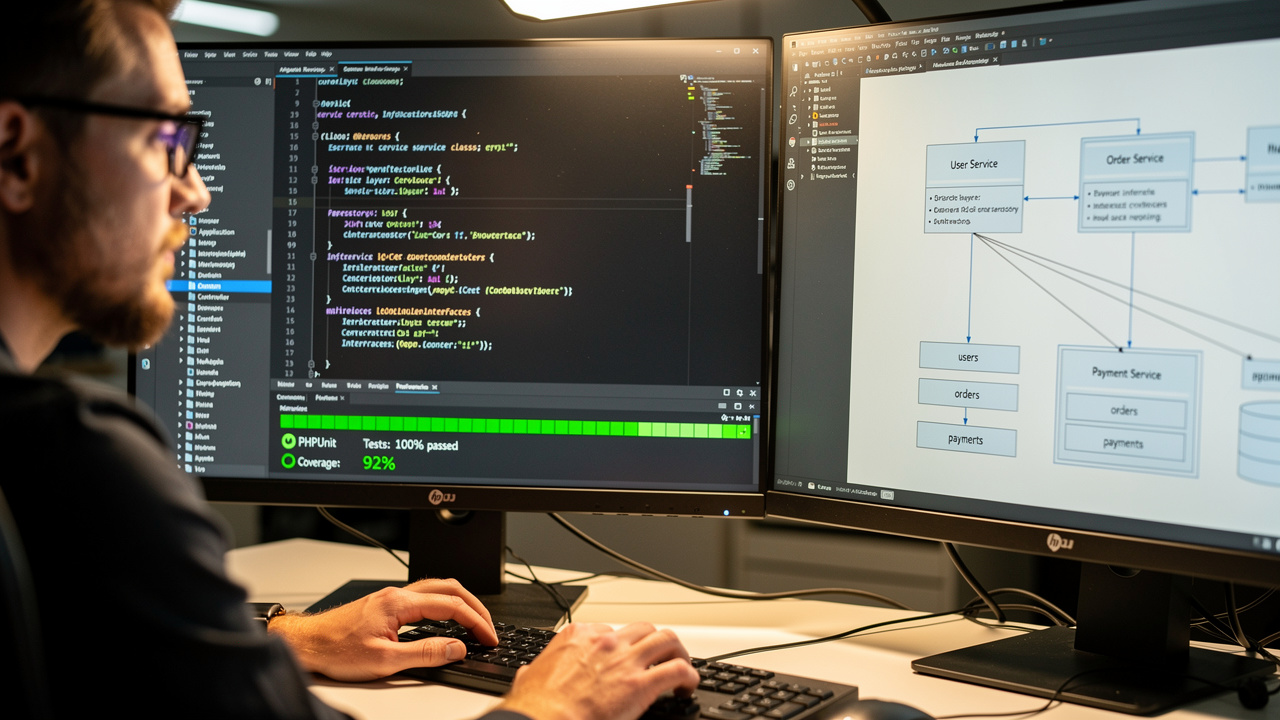
Start by looking at how a how a developer or agency actually writes code, not just what they promise on a sales call. Ask about service-layer architecture, which keeps business logic out of bloated controllers, and whether Eloquent relationships are scoped properly to avoid slow, repetitive database queries. Test coverage using tools like PHPUnit or Pest should be standard practice, not an afterthought added once something breaks in production.
Communication matters just as much as code quality, and the same discipline should extend to deployment practices, such as using Docker Compose for Laravel to keep development and production environments consistent. Look for a partner who explains decisions in plain language, gives regular progress updates, and has real experience across engagement models, project-based work, dedicated teams, or outstaffing, depending on what your timeline actually needs from Laravel development services.
The Takeaway
Laravel development services span a wide range, from single custom applications to APIs and full multi-tenant SaaS platforms, and cost tracks closely with how complex your requirements really are. The framework's built-in tools, Eloquent, Blade, Sanctum, and Cashier, give any competent team a strong starting point, but the tools alone don't guarantee a good outcome.
What separates a strong Laravel development service from an average one is product-first thinking paired with disciplined use of AI-assisted workflows to move faster without sacrificing judgment. If you're evaluating partners right now, run them through the criteria in this guide: code quality, communication, and relevant industry experience. I bring hands-on SaaS and marketing-platform experience to that conversation, and I'm happy to talk through what your project actually needs.
Frequently Asked Questions
The questions below cover the details readers ask most often before hiring for a Laravel project.
Is Laravel A Good Choice For Building A SaaS Product?
Yes. Built-in multi-tenancy support, Laravel Cashier for Stripe billing, and queue systems for background jobs make Laravel well suited for subscription products that need to scale across many customer accounts.
How Long Does It Take To Build A Laravel MVP?
Typically 8 to 14 weeks, depending on feature scope and how quickly stakeholders respond during review cycles. Delays in feedback are the most common reason MVP timelines stretch beyond the original estimate.
Can Laravel Handle Real-Time Features Like Live Notifications?
Yes, through Laravel Echo and WebSockets. These tools power live chat, instant notifications, and collaborative editing tools that update instantly across every connected user without page refreshes.
What's The Difference Between Hiring A Freelancer And An Agency For Laravel Work?
Freelancers usually cost less and offer direct communication, while agencies provide redundancy, broader skill coverage, and structured QA processes, though some experienced solo Laravel development services offer both speed and rigor.
Do I Need Ongoing Maintenance After My Laravel App Launches?
Yes. Security patches, Laravel version upgrades, and performance monitoring through tools like Horizon should continue after launch to keep the application stable, secure, and running efficiently as traffic grows.
How Do I Know If My Project Needs A Dedicated Team Vs A Fixed-Price Engagement?
Fixed-price work suits well-defined, one-off projects with a clear finish line. Dedicated teams suit ongoing products that need continuous iteration, deep context, and a partner who stays close to the product long-term.