A missed delivery window does more than annoy one customer. It piles up support calls, refunds, and a dent in your reputation that spreads fast across reviews and social media. Manual dispatching, paper delivery notes, and guessing where a driver actually is only make the problem worse over time. Delivery management software fixes this by giving you one system that handles dispatch, tracking, and delivery confirmation from order intake to final signature.
This article breaks down what delivery management software actually does, the features you cannot skip, and how different industries like courier services, restaurants, and e-commerce brands each need something a little different. I will also walk through pricing models and a practical way to pick a platform that fits your budget and your delivery volume. My name is Ahmed Hasnain, and my work building product features for a marketing platform called Replug has taught me a lot about what makes tracking, notifications, and dispatch systems reliable behind the scenes.
Stick with me and you will walk away knowing exactly what to check before you sign up for anything.
Key Takeaways
- Delivery management software runs your full delivery lifecycle, from order intake to signed proof of drop-off, in one dashboard.
- Four features are non-negotiable: real-time tracking, proof of delivery, automated notifications, and driver management.
- Route optimization drives the biggest return, often cutting total driving distance by 15-25%.
- Courier, restaurant, e-commerce, and field service operations each need a platform built for their own workflow.
- Compare pricing and support quality across two or three platforms using real order data before you commit.
What Is Delivery Management Software?

Delivery management software is a unified platform that manages the full delivery lifecycle, from the moment an order comes in to the moment a customer signs for it. It brings dispatch, live tracking, driver communication, and proof of delivery together in one system instead of scattering them across phone calls, spreadsheets, and paper forms. For any business handling last-mile logistics, whether that means a fleet of vans or a handful of gig drivers, this kind of tool removes the guesswork dispatchers deal with every day.
Before this software existed, most small operations ran on sticky notes and group chats. Dispatchers called drivers just to check locations, and proof of delivery meant a paper slip stuffed in a glovebox. This kind of platform replaces all of that with automated dispatch, GPS tracking, and digital documentation everyone can see the moment it happens.
What Core Features Should You Look For?
Every delivery management software worth paying for shares four features you should never compromise on. Real-time tracking, proof of delivery, automated notifications, and driver management form the baseline any platform needs before you even look at pricing. Route optimization sits on top of these fundamentals and tends to deliver the biggest return, since a well-planned route directly cuts fuel and labor costs.
Real-Time Tracking and Notifications
Real-time tracking puts every driver's location on one map, so dispatchers can watch delivery progress without picking up the phone. Customers get the same visibility through SMS or email links showing a dynamic ETA that updates as traffic and stops change. Automated alerts fire at key moments, like a driver five minutes out, cutting down the "where is my order" calls that eat up support time.
Proof of Delivery (ePOD)

Proof of delivery, often shortened to ePOD, captures a signature, photo, and GPS timestamp the moment a driver hands off a package. Sign-on-glass technology lets the customer sign right on a phone or tablet screen, and the system emails a PDF confirmation automatically. This digital trail cuts down on invoicing errors and settles disputes fast, since you have a timestamped photo instead of a driver's word against a customer's.
Route Optimization
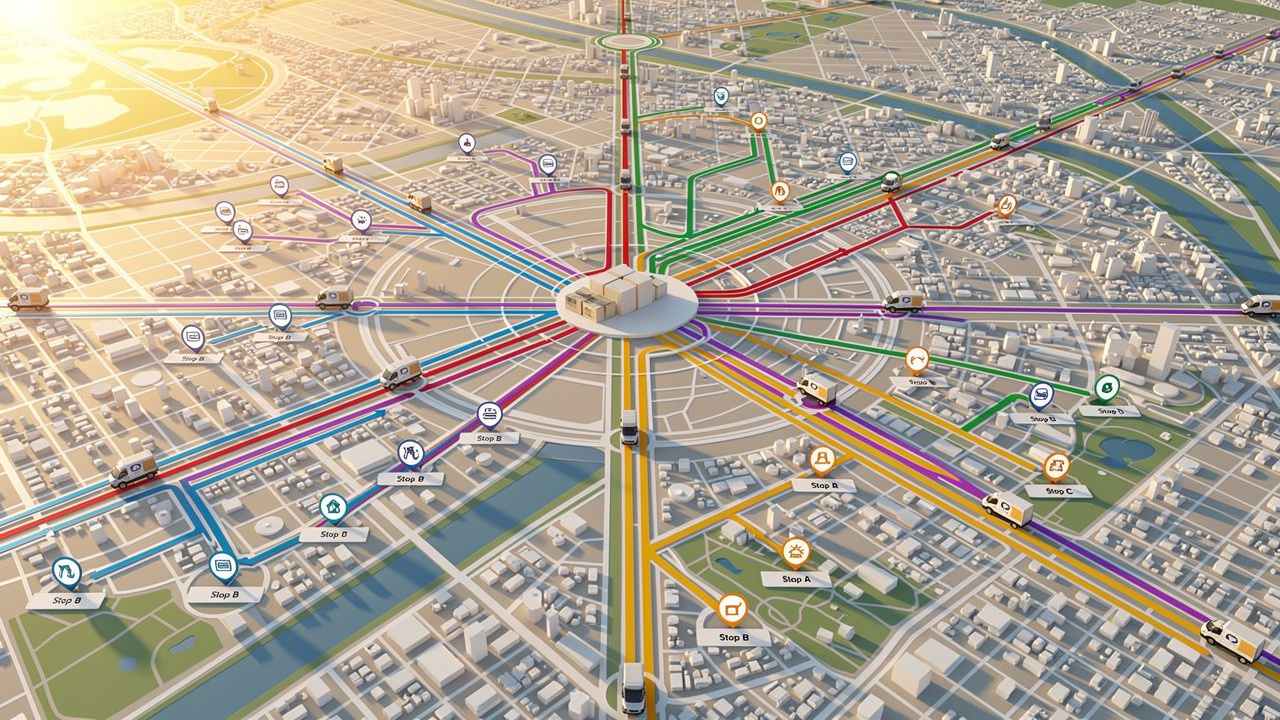
Route optimization takes every stop on a driver's list and works out the fastest order to visit them in, which matters more given operating costs rose 4.2% in 2025, outpacing inflation by 1.5 points. Good optimization engines can cut total driving distance by 15-25%, a meaningful saving considering average truck operating costs have climbed to a record $2.336 per mile. Some platforms plan routes ahead of time in a waterfall model, while others adjust routes in real time as new orders come in.
Driver Management and Mobile App

The driver app is where all this planning actually happens on the ground, so it needs to work even with a spotty signal. Offline mode stores delivery data locally and syncs once a connection returns, while in-app chat and biometric login keep drivers moving without fumbling for passwords. Task workflows guide drivers step by step through signature capture, photo documentation, and barcode scanning.
Which Type of Delivery Software Fits Your Industry?
Courier, restaurant, e-commerce, and field service operations each run on different workflows, so the right delivery management software depends heavily on your industry.
Courier and Multi-Parcel Operations
Courier companies handle high volumes of small parcels moving through hub scanning, sorting, and multiple stops for merchant clients. Research into hierarchical worker scheduling for efficient multi-source urban delivery shows how algorithmic dispatch models can coordinate high-volume, multi-stop courier networks more efficiently than manual assignment.
Restaurant and Food Delivery

Restaurants need a pickup-then-delivery workflow that starts the moment an order is ready, not before. Integration with point-of-sale systems like Toast, GloriaFood, and Clover lets orders flow into dispatch automatically instead of requiring manual entry from staff during a dinner rush. Many restaurant-focused platforms offer free tiers for smaller order volumes, which fits the tighter margins common in food service.
E-Commerce and Same-Day Delivery
This need is echoed in emerging research on AI-driven crowdsourced logistics, including a recent study on smart contracts and AI agents for secure last-mile delivery that explores how automated systems can coordinate last-mile fulfillment at scale. Native integrations with Shopify integrations and WooCommerce sync orders automatically, while real-time tracking links give customers the same transparency they expect from major carriers. This visibility also helps online store owners owners tie delivery performance back to repeat purchase behavior.
Field Service and Recurring Jobs
Field service companies like HVAC contractors and maintenance providers do not fit a standard delivery model at all. Academic work on sustainable delivery scheduling, including an incentive-based decision-support system for delivery scheduling, shows how automated scheduling logic can balance recurring visit patterns with operational efficiency. Custom fields let teams capture equipment serial numbers, parts used, and other job-specific details.
How Do You Choose the Right Platform?
Choosing the right delivery management software comes down to matching pricing to your delivery volume and prioritizing integrations and support over the cheapest sticker price. A platform that saves your dispatcher an hour a day is worth more than one that simply costs less upfront. Start by mapping your actual delivery patterns before you compare vendors side by side.
Pricing Models and Total Cost
Most delivery management software uses one of three pricing models: per-driver, per-stop, or freemium.
- Per-driver plans typically run $29 to $49 a month per driver, which works well for stable fleets.
- Per-stop pricing suits businesses with volume that swings month to month.
- Trial periods run anywhere from 7 to 30 days, so use that window to measure real efficiency gains, not just the subscription cost.
Integrations and Support Quality
A platform can have every feature on paper and still fail you if it cannot talk to your other systems. Look for API integration with your ERP, accounting, or e-commerce platform, plus flexible CSV import for bulk order uploads. Real-time chat support matters more than a ticket queue when a driver is stuck mid-route, since delivery problems need answers in minutes, not hours.
Building Reliable Delivery Software: An Engineer's Perspective
Building reliable delivery software takes the same engineering discipline as building any tool that depends on accurate, real-time data flowing without gaps. I am Ahmed Hasnain, and my work on Replug marketing platform, a marketing platform built at D4 Interactive since April 2024, involves branded links, analytics, and campaign workflows that live or die on the same things delivery platforms need: clean data flow, dependable notifications, and tracking that never lags behind reality.
That experience shapes how I think about picking delivery software too. I lean on an AI-assisted workflow, using tools like Claude, Codex, and ChatGPT for research and debugging, which speeds up development without cutting corners on the judgment calls that matter to actual users. Whether it is a link analytics dashboard or a driver's route screen, the standard should stay the same: fast, but never fragile.
The Takeaway
Picking delivery management software is not about finding the platform with the longest feature list. Four things matter most: real-time tracking, proof of delivery, automated notifications, and driver management, with route optimization sitting on top to protect your margins. After that, industry fit decides everything, since a courier company and a restaurant need genuinely different tools, even if both call themselves delivery software.
Before you sign any contract, trial two or three platforms using your own order data, not a canned demo account. Compare how each one handles your busiest day, not your quietest one. Building product features for tools like Replug has taught me that software only earns trust when it holds up under real pressure, and delivery software is no different from that standard.
Frequently Asked Questions
Here are quick answers to the questions people ask most often about picking and running delivery management software.
How Much Does Delivery Management Software Typically Cost?
Pricing usually depends on the model you pick. Per-driver plans run about $29 to $49 a month per driver, per-stop pricing charges based on delivery volume, and several platforms offer free tiers for smaller operations handling up to roughly 300 orders a month.
Can Delivery Management Software Integrate With My Existing E-Commerce Platform?
Yes, most established platforms offer native integrations with Shopify and WooCommerce that sync orders automatically. If you use a custom order management system, API-based integration lets data flow between the two without manual entry, keeping tracking and inventory numbers accurate.
Is Delivery Management Software Worth It For Small Businesses?
It usually is, since freemium and low-volume pricing tiers keep the entry cost low. Most businesses see a return within 3 to 6 months through fewer failed deliveries, less time spent on manual dispatch, and fewer support calls asking about order status.
What's the Difference Between Route Optimization and Simple GPS Tracking?
GPS tracking only shows you where a driver is right now. Route optimization goes further, planning the most efficient order to visit every stop by factoring in vehicle capacity, delivery time windows, and driver shift limits, which is what actually cuts fuel and labor costs.
Do I Need HIPAA or SOC 2 Compliance for My Delivery Software?
You need HIPAA compliance if you deliver medications, medical devices, or anything involving patient health information. SOC 2 Type II compliance is not legally required but signals that a vendor undergoes regular independent security audits, worth checking for any business handling customer data.
How Long Does It Take to Implement Delivery Management Software?
Most platforms offer trial periods between 7 and 30 days, which is usually enough time to test dispatch, tracking, and driver onboarding with real orders. Full return on investment tends to show up within 3 to 6 months as failed deliveries drop and dispatch time shrinks.